30,632 → 1,131
Total errors
Case study
Long-term WCAG/ADA improvements on a large WordPress site, delivered within ongoing retainer work
A large existing website had never gone through a formal accessibility scan. When the first audit was performed, it revealed tens of thousands of automated issues across templates, reusable components, and page content. Because there was no separate budget for a full remediation project, the work had to be addressed gradually within the client’s ongoing retainer.
This was not a one-time cleanup with a dedicated project budget.
The site had grown over time without a formal accessibility baseline, and the first scan exposed issues across a broad content footprint. Many of those findings were tied to shared templates, repeated content patterns, and page-level inconsistencies, which meant the work needed to be approached strategically rather than through isolated fixes.
I contributed to a long-term accessibility remediation effort focused on making practical improvements over time.
Since retainer hours were limited, I prioritized higher-impact accessibility issues first and worked down into smaller items as time allowed. The work included identifying recurring issue patterns, improving shared templates and reusable components, and addressing page-level problems where a fix could improve results across larger portions of the site.
Scanning and tracking relied on automated tooling in the Pope Tech ecosystem alongside manual judgment about which findings represented real barriers versus noise or items that would require design approval.
This long-term effort reduced total automated accessibility errors from 30,632 to 1,131, while errors per page dropped from 16.2 to 0.51. The number of scanned pages also increased from 1,891 to 2,209, showing that the improvements held up across a larger portion of the site.
30,632 → 1,131
Total errors
16.2 → 0.51
Errors per page
1,891 → 2,209
Pages scanned
Retainer-based remediation
High-priority issues addressed first over time
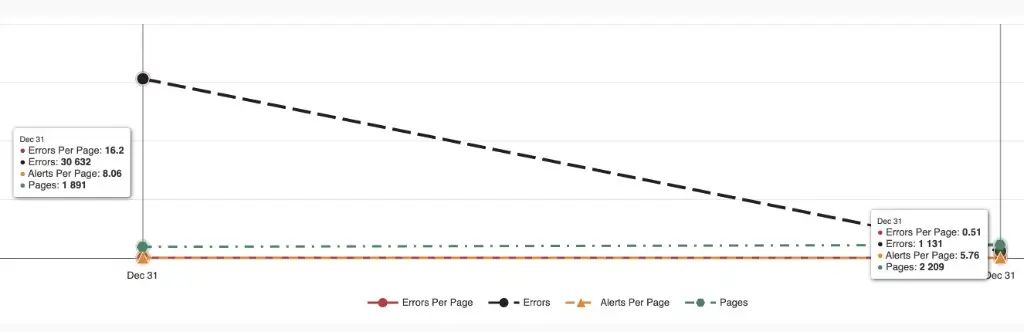
Many of the remaining findings were false positives from automated scans or items that would have required design changes that were ultimately declined by the client. The result was a significantly stronger accessibility baseline and a much cleaner foundation for future site updates.